Departmentation, often the second step in designing an Organizing Structure.
is to bring together homogeneous jobs into groups and then decide the relation between groups , known as departments.
Temporary
this is tempeorary notes till i have the time to fix it
Patterns of Departmentation
-
by simple numbers
a structural department which includes grouping all people who are to perform the same duties and functions, by putting them under one manager ( old and rapidly declining in use )
reasons for which include the rising demand for more specialized and different skills.
groups of different specialized personell are more efficient than by simply sorting them in numbers. -
by time
oldest form of structuring organization
think of shift duties like in hospitals or Refineries,
practically any organization required to run 24/7 -
by enterprise functions
the most widely used form of departmentation , grouped by function, this is consistent with the idea of specialization and division of work, activities that are alike or similar are placed together in one department and under a single chain of command.
This also facilitates Coordination
weaknesses include slow response time to changes, may cause decisions to pile on top, poor horizontal coordination between departments, results in less innovation -
by territory/geography
self explanatory -
by product/service
also self explanatory a large organisation may produce different products and each one can be a department -
by process/equipment
a department dedicated to each step in a process can be beneficial to a small organization -
by customer
On basis of common customers or types of customers
ex: dept to handle foreign customers, another for domestic customers, one for Wholesale Customers, and for retail customers -
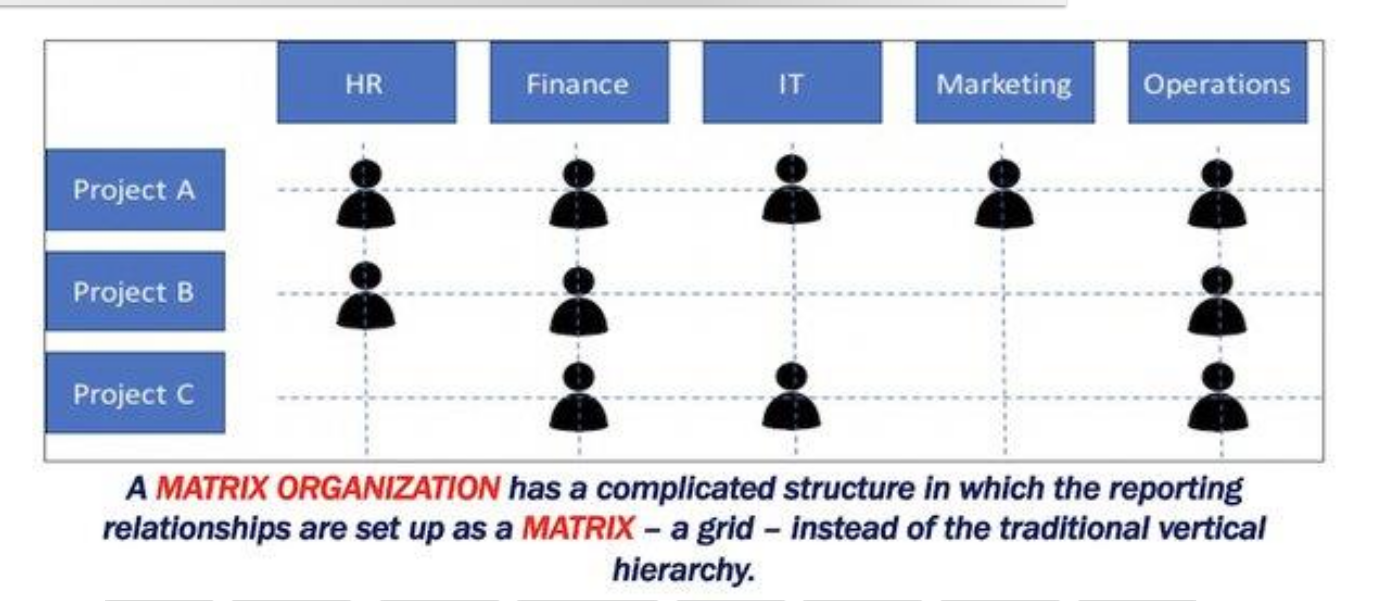
Matrix
a combination of the functional and the product/project patterns of departmentation in the same org structure.